
Case Study
Lightweight Titanium Upper Control Arm for High-Performance Off-Road Suspension
Overview
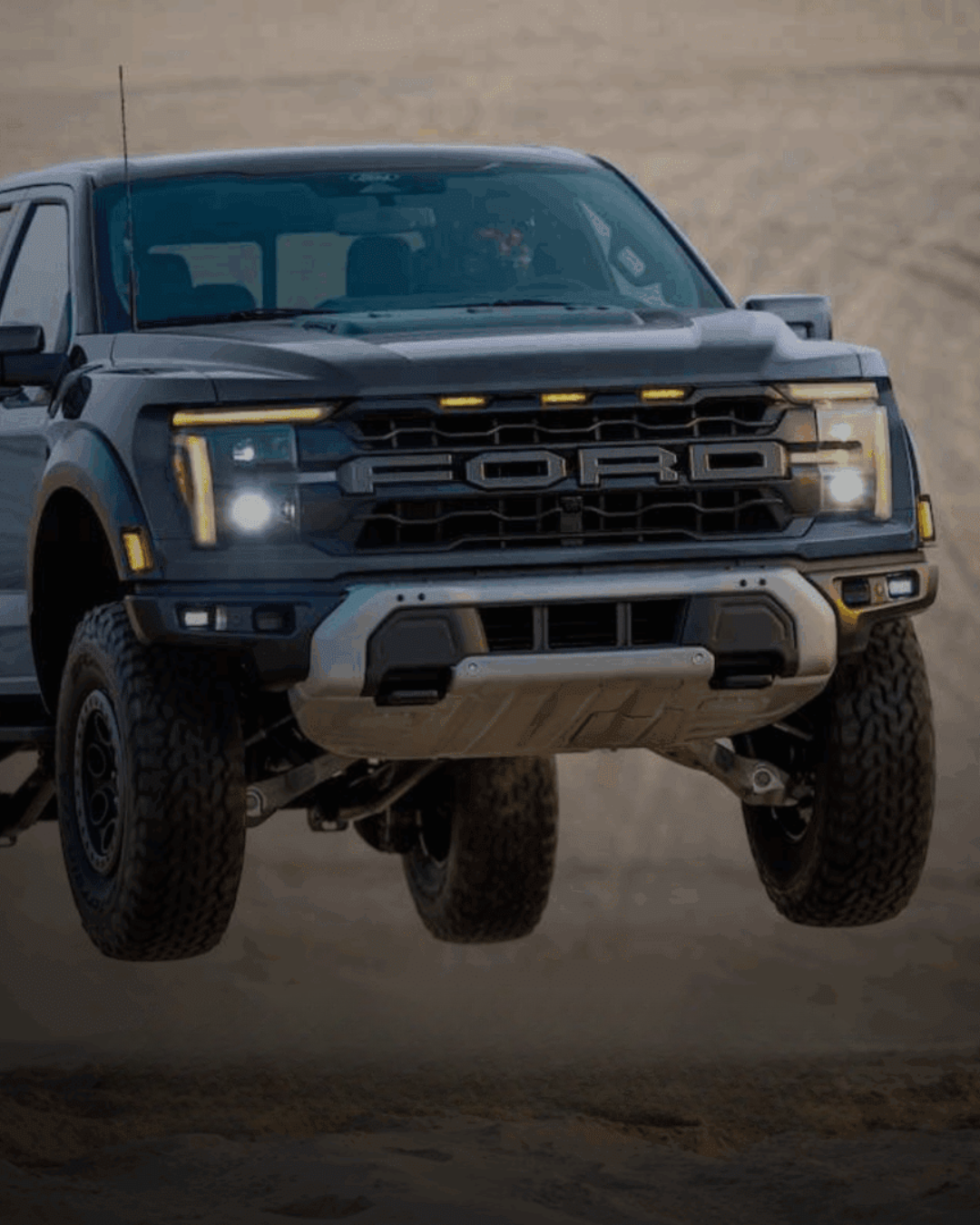
Fundamental Motorsports and Howco Additive partnered to redesign and manufacture a next-generation upper control arm for a modified Ford Raptor—a platform known for aggressive desert racing and extreme suspension demands. Their goal: reduce weight significantly while maintaining or improving structural performance under harsh off-road loads.
Using Ti-6Al-4V and Laser Powder Bed Fusion (LPBF), the team produced a fully optimized, generative-designed control arm that outperforms the OEM steel version while cutting mass by over 60%.
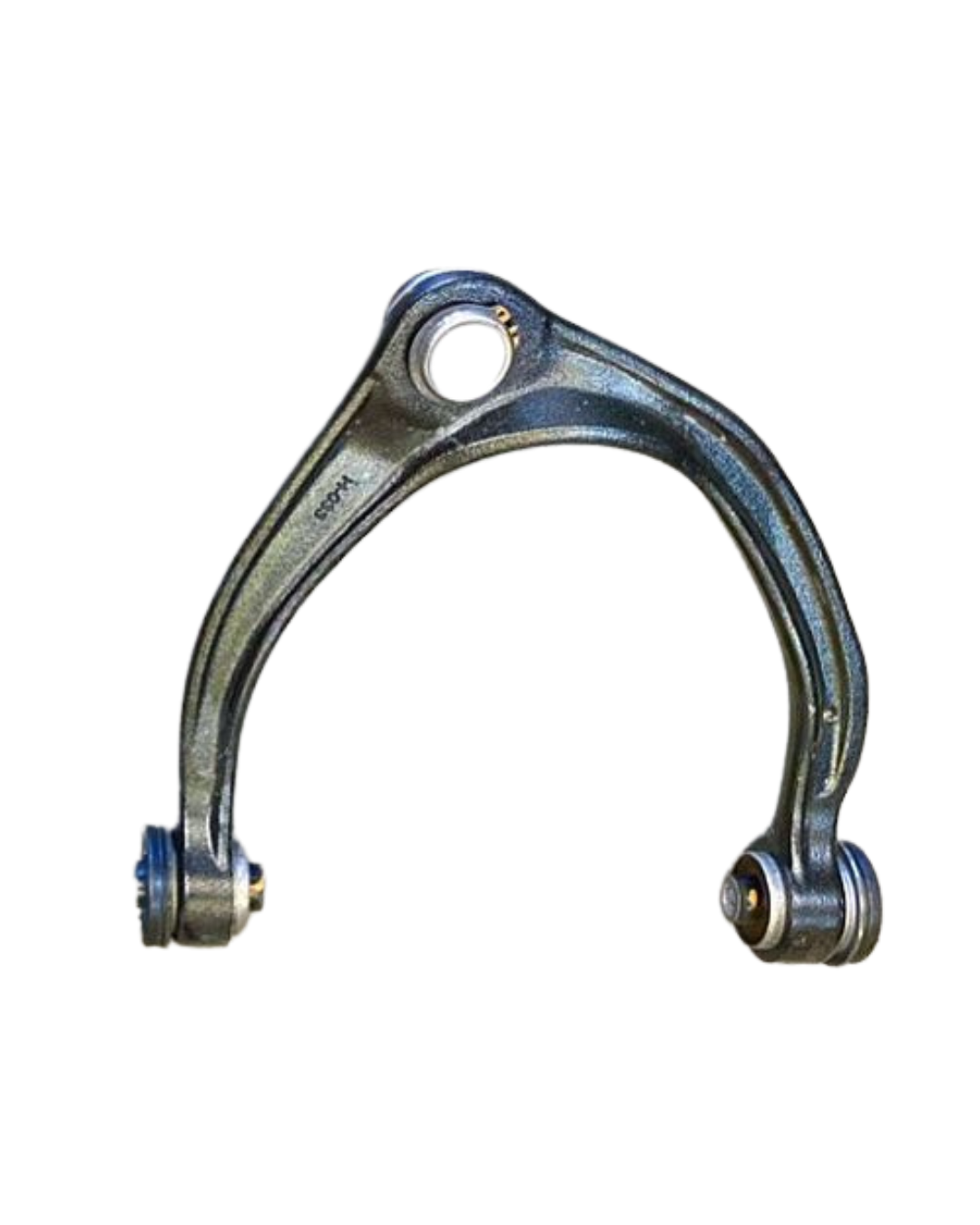
The Problem with the OEM Steel Control Arm
Traditional stamped or forged steel control arms are built for mass-market manufacturing rather than high-end racing performance. On the Fundamental Motorsports platform, the OEM arm carried excessive unsprung weight, relied on fixed geometry that limited suspension tuning, and used bulky cross-sections that offered no opportunity for structural refinement. Because conventional manufacturing cannot create internal complexity—such as hollow sections or load-path-aligned reinforcements—the part’s strength-to-weight ratio was fundamentally capped. In desert-racing environments, where jumps, impacts, and rapid chassis inputs dominate the vehicle’s behavior, reducing unsprung mass becomes one of the highest-value performance upgrades available.
Why Additive Manufacturing Was the Correct Choice
This constraint made the control arm an ideal candidate for metal additive manufacturing, which removes many geometric limitations. LPBF (Laser Powder Bed Fusion) enabled true topology optimization, resulting in organic, load-path-aligned structures tailored specifically to real suspension forces. The switch to Ti-6Al-4V delivered superior fatigue resistance and corrosion performance, while the ability to print complex hollow geometries slashed mass without compromising strength. Free from the rules of stamping or forging, the engineering team could finally reimagine the control arm from the ground up, designing purely for performance rather than manufacturability.
Engineering the New Geometry
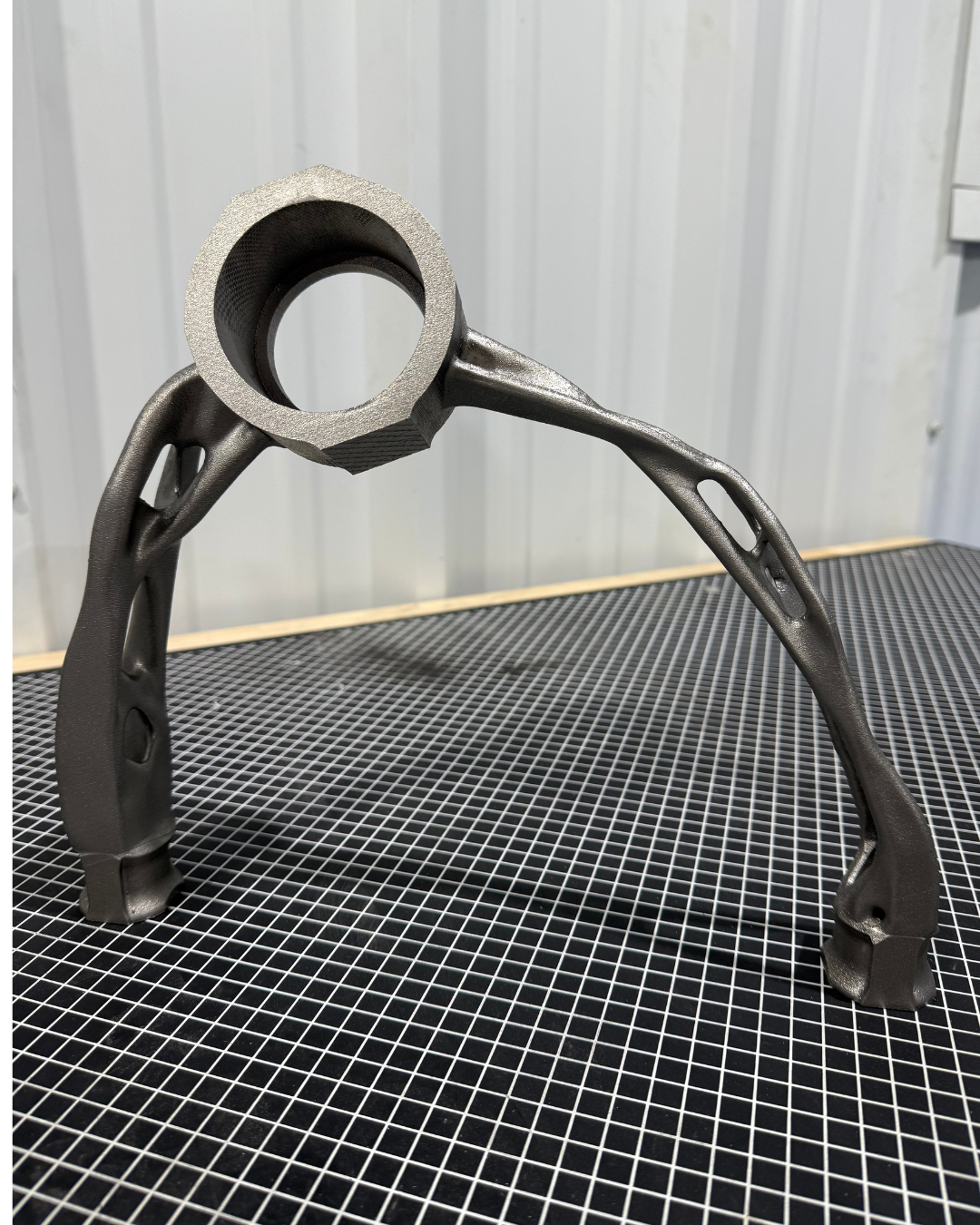
The redesign began with gathering real-world load cases—braking, cornering, landing, and rough-terrain impacts—followed by detailed FEA to locate stress concentrations. Guided by these results, the final geometry incorporated load-aligned ribs, thin optimized walls, and strategically thickened regions only where required. Hollow interior channels removed dead weight while maintaining stiffness, and a precision-printed bearing boss enabled tight-tolerance post-machining. The resulting geometry significantly improved suspension responsiveness, stiffness, and durability without exceeding packaging or mass targets.
Material & Manufacturing
The part was produced in Ti-6Al-4V Grade 23, chosen for its exceptional strength-to-weight ratio, fatigue strength, and compatibility with post-print heat treatment—all essential for a structural suspension component operating in corrosive, high-impact racing environments. Using a multi-laser Nikon SLM platform, engineers optimized layer thickness and build orientation for fatigue-critical regions, minimized support structures through internal geometry refinement, and performed precision CNC machining on bearing bores and interface surfaces. The final result was a full-density, high-accuracy titanium control arm ready for demanding motorsports use.
Results & Real-World Impact
The most dramatic improvement came from weight reduction: compared to the OEM steel component, the AM titanium arm came in over 60% lighter. This decrease in unsprung mass produced immediate gains in suspension response, damping efficiency, traction, and high-speed steering precision. Structural validation through FEA and testing confirmed equal or greater stiffness than the OEM arm, with better load distribution and significantly enhanced fatigue life under harsh off-road conditions. In real racing environments, the Fundamental Motorsports team saw improvements in suspension feel, reduced shock heat-soak, and greater durability through rough terrain and jump landings. The lighter, stiffer design contributed directly to improved competitiveness.
Conclusion
This project demonstrates how metal additive manufacturing can outperform traditional manufacturing methods in the most demanding automotive applications. By combining topology optimization, titanium LPBF, and advanced post-processing, Howco Additive and Fundamental Motorsports produced a control arm that is stronger, lighter, and purpose-built for racing performance. It stands as a clear example of how AM unlocks design freedom, performance gains, and structural efficiency that simply cannot be achieved through forging, stamping, or machining.