
Case Study
Additively Manufactured Anti-Wicking Device for Exxon Machinery Systems
1. The Problem: Oil Traveling Where It Shouldn’t
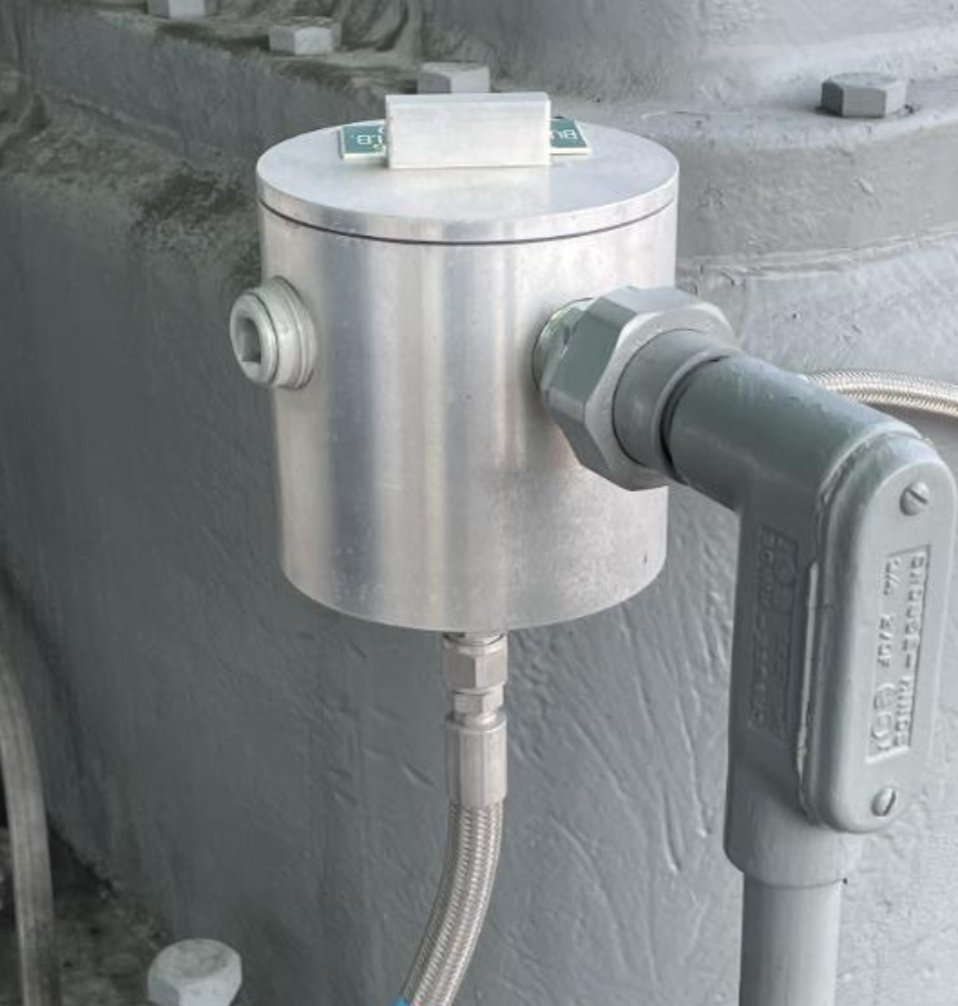
In refinery machinery, thermocouples sit inside bearing housings filled with hot lubricating oil. Over time, that oil can slowly wick up the thermocouple wires, traveling all the way to the electrical cabinet—where it can cause shorts, corrosion, or complete instrument failure.
As shown in Exxon’s process-flow diagrams, this issue can also lead to environmental leaks and expensive unplanned shutdowns.
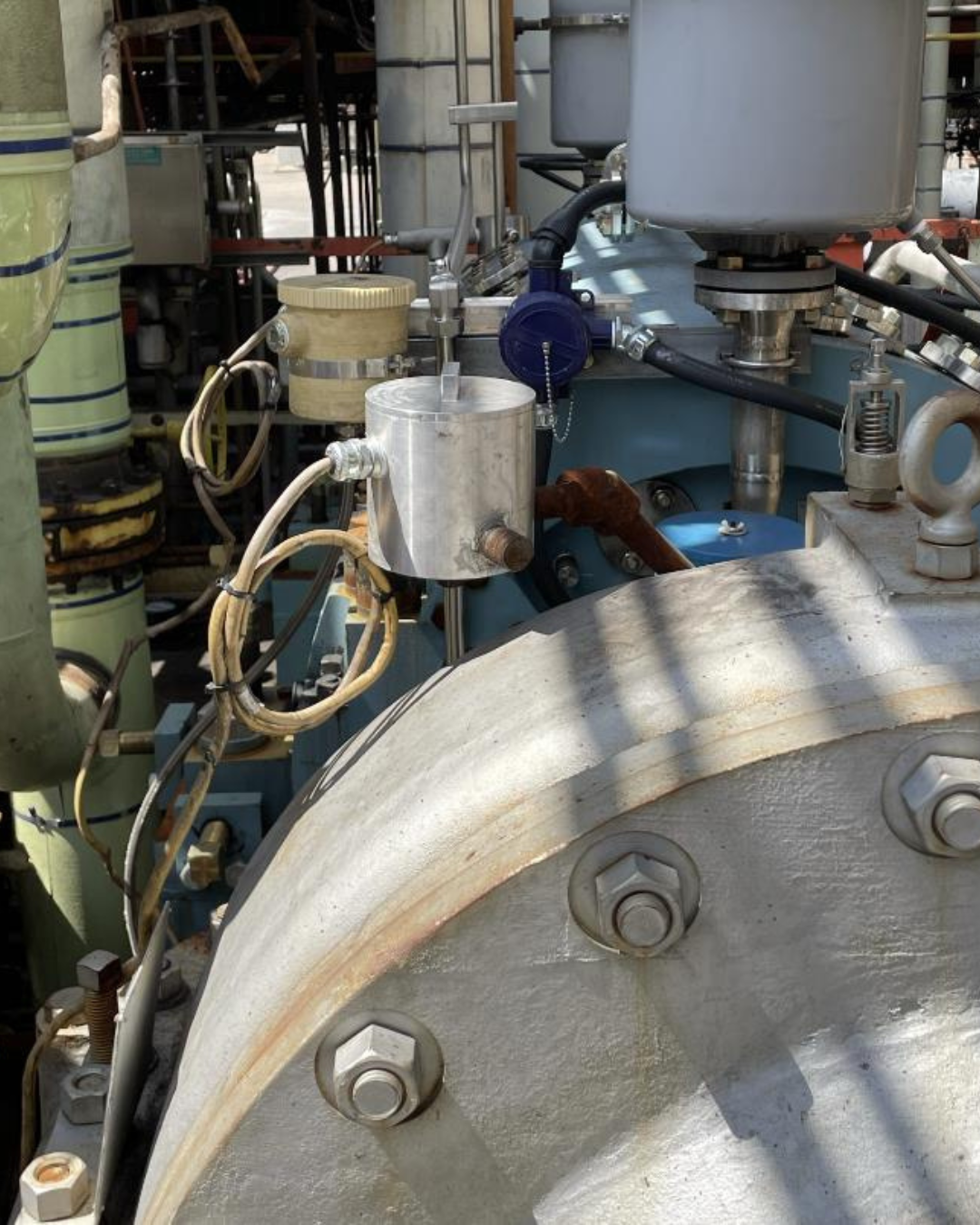
Exxon’s existing anti-wicking device wasn’t solving the problem. It leaked, was hard to service, and couldn’t be repaired without shutting down equipment. LSU’s engineering team was brought in to redesign the system from the ground up—this time using metal additive manufacturing.
2. Design Goals & Why Additive Manufacturing Was Used
The team identified the key requirements early:
Stop oil from reaching the electrical panel
Keep the wet and dry environments separated
Provide reliable electrical continuity
Allow fast, tool-free maintenance
Mount easily to existing equipment
And because Exxon wanted this to be their first metal AM field deployment, the new design had to be optimized specifically for LPBF—not just converted from a machined design.
LPBF offered the ability to form complex internal shapes, reduce leak paths, and create a strong, corrosion-resistant 316L stainless structure.
3. The Additive Redesign
The team didn’t tweak the old design—they reimagined the device around how metal additive actually works.
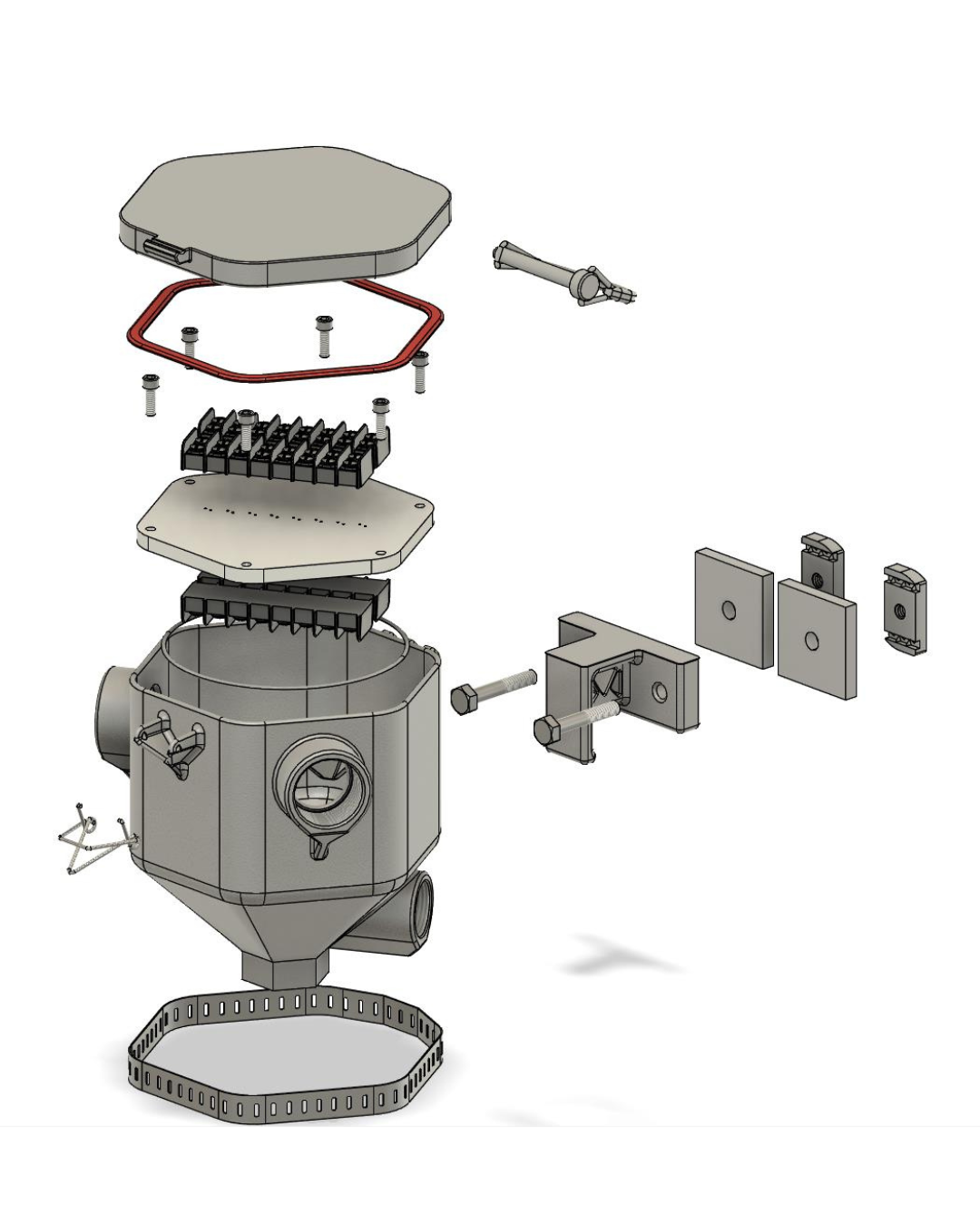
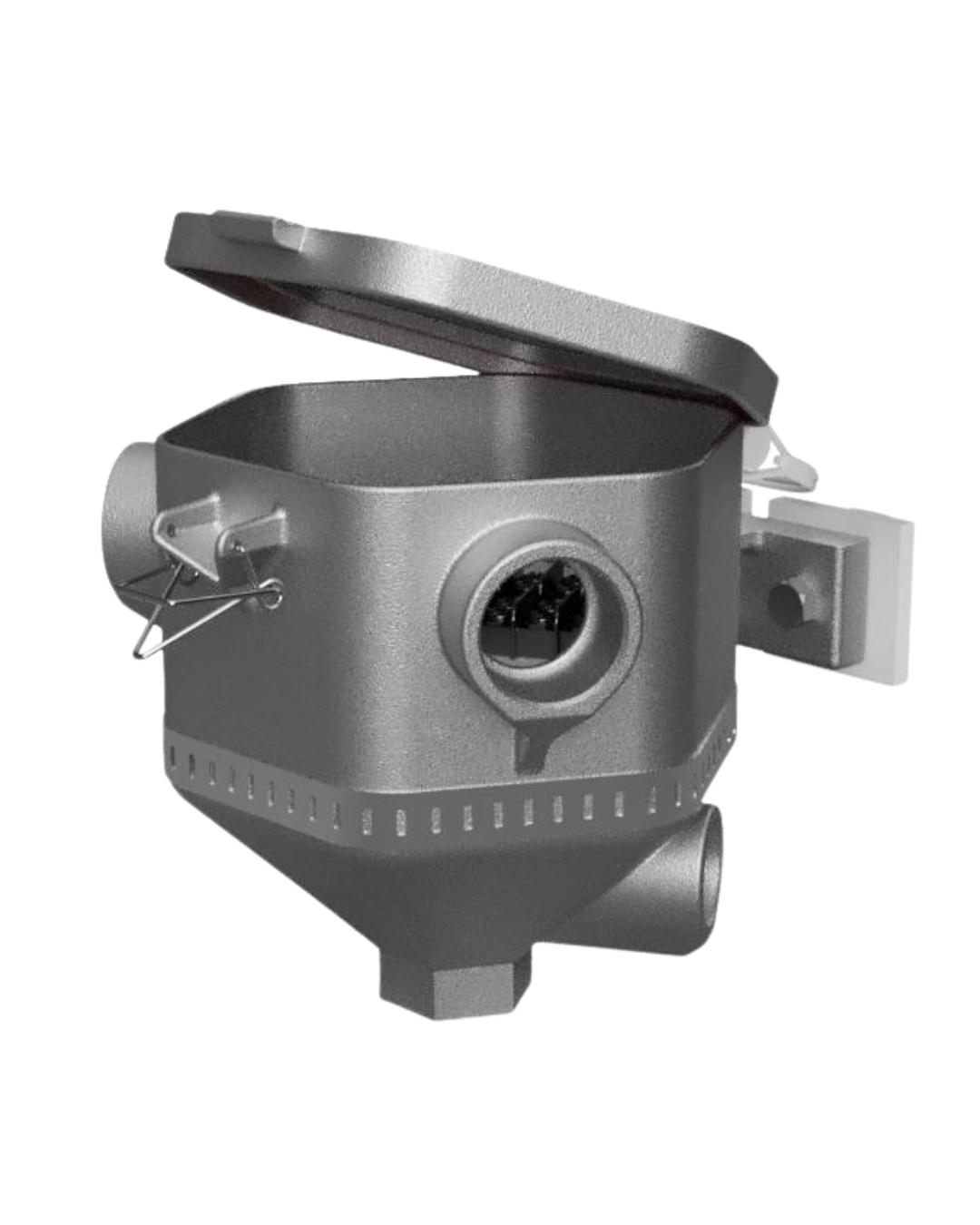
A two-chamber geometry
A pyramidal wet chamber guides incoming wires and reduces stress concentrations.
A hexagonal dry chamber provides optimal spacing for fasteners, easier sealing, and efficient material use.
Serviceable separation plate
The plate that isolates oil was redesigned to be accessible and replaceable, made from G-10 composite for high temperature, low absorption, and strong dielectric performance.
Technician-friendly lid
Using a hinge and single latch, the new lid allows tool-less access. A silicone gasket ensures reliable sealing even in outdoor and high-temperature areas.
Mounting and installation
A clamp-style bracket allows the device to mount to existing structures without modification—something technicians specifically requested.
Everything from flange geometry to gasket compression to screw spacing was shaped by additive manufacturing constraints such as overhang angles, support minimization, and post-processing access.
4. Engineering Validation
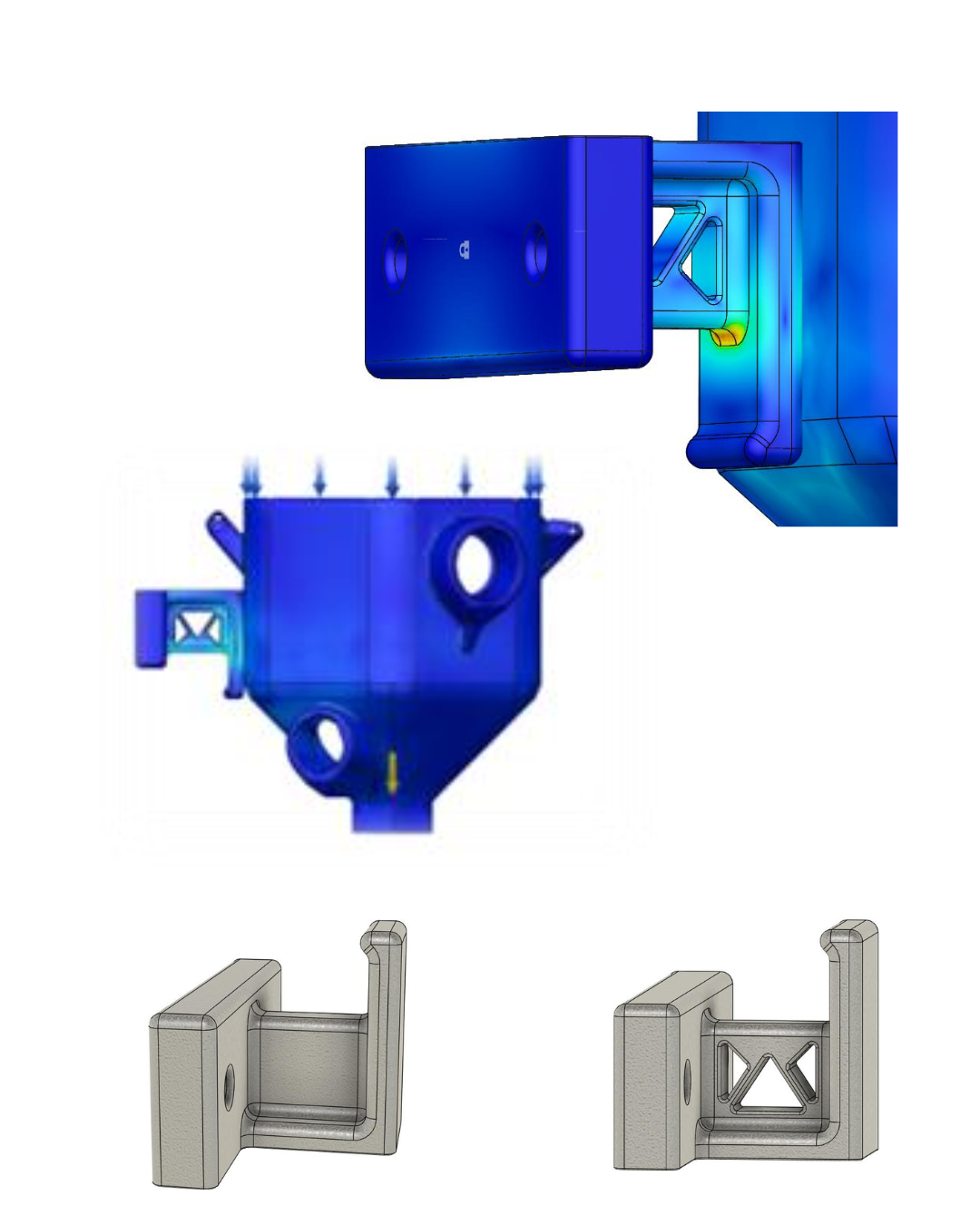
To prepare the design for refinery service, LSU performed multiple mechanical studies. The results:
Conduit installation simulation
The device can withstand the torque applied during conduit installation with a safety factor above 6. LSU Exxon Project#54 - FDPPS
Sealing and gasket behavior
The lid remains extremely rigid under the required gasket compression, ensuring a long-term leak-proof seal.
Latch and bracket strength
Both components were verified through stress analysis, with the latch showing a safety factor > 3 and the bracket > 5 in both vertical and horizontal loading. LSU Exxon Project#54 - FDPPS
Additive manufacturing efficiency
Optimized geometry reduced support material by over 4× in some regions, decreasing print time and simplifying post-processing.
The end result is a design that is strong, serviceable, additive-ready, and field-practical.
5. Final Outcome & Path to Deployment
The final prototype meets Exxon’s key performance, cost, and usability targets:
No leak paths and a fully sealed wet/dry interface
Three mounting options built into the design
16 terminal block positions, all serviceable from the top
316L stainless steel construction for corrosion resistance
Device cost far below Exxon’s target budget
Survives required drop, pressure, and installation loads
This case study demonstrates how metal additive manufacturing can solve long-standing reliability issues in refinery instrumentation while improving technician workflow and reducing environmental risk.
With a print-ready design and validated structure, the next steps are full metal build, field testing, and eventual deployment at Exxon facilities.
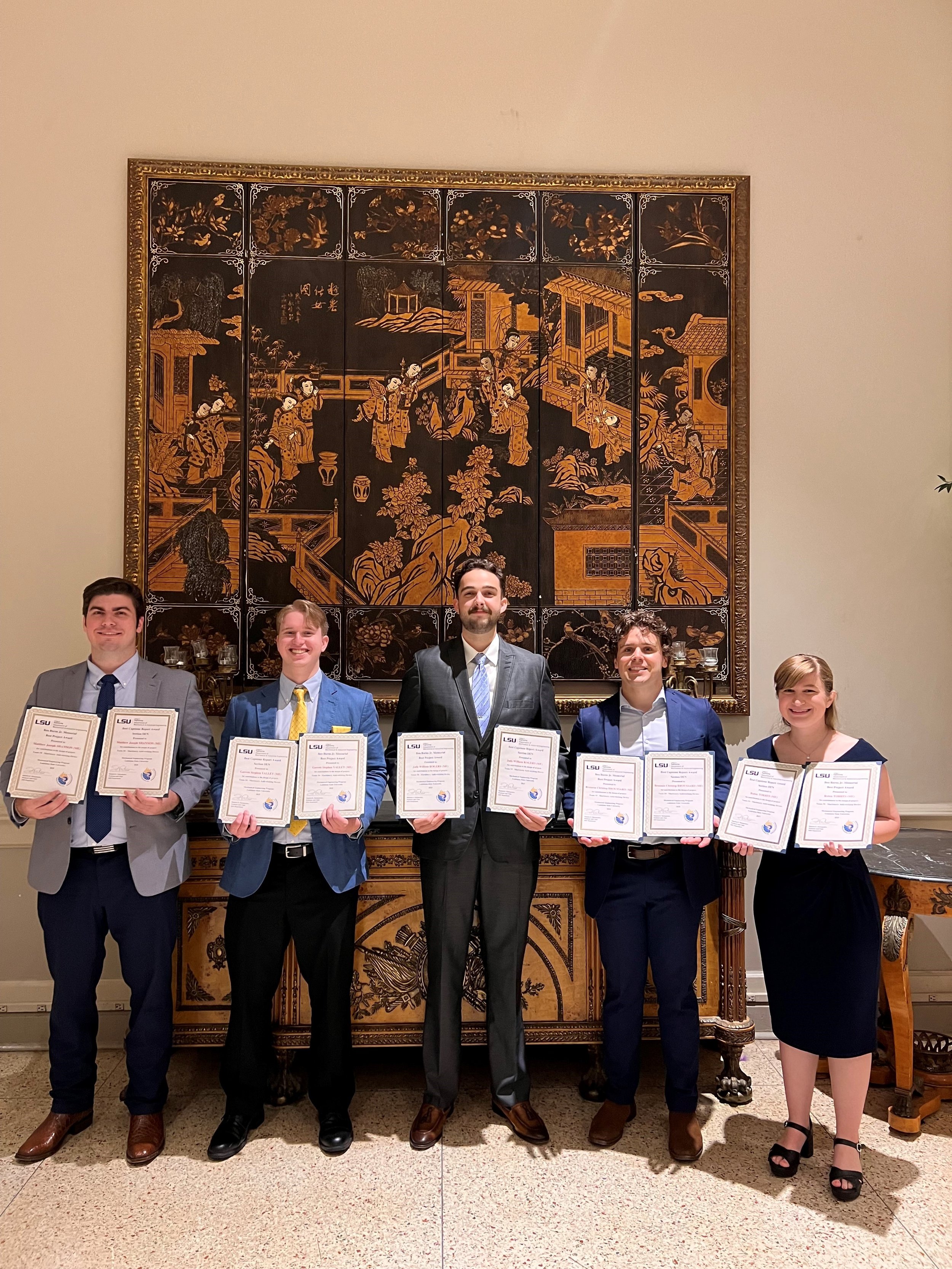
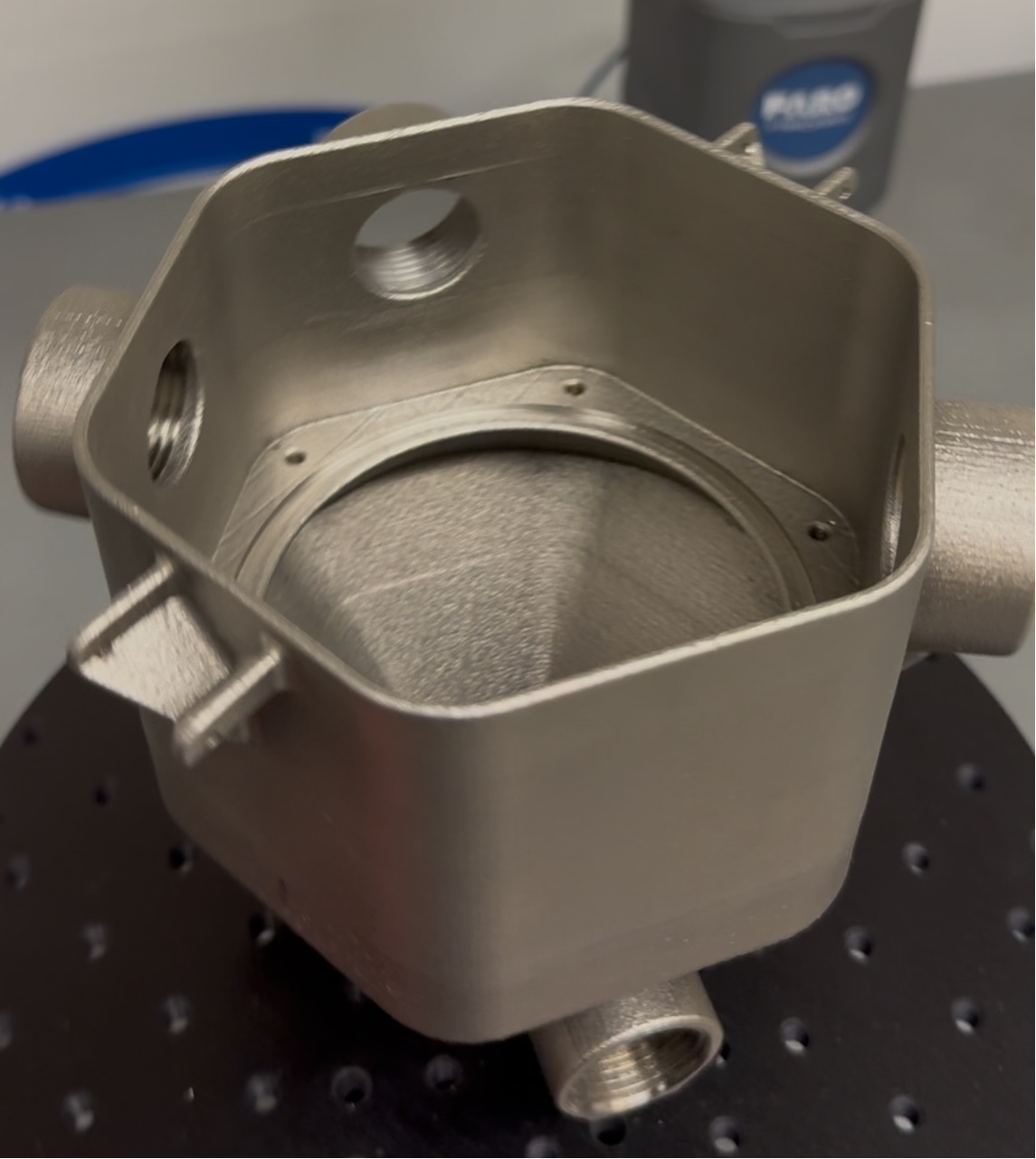
Multidisciplinary team—comprising the LSU College of Engineering senior capstone team (Team 54: Brennon Broussard, Jude Rogers, Matthew Shannon, Garrett Valley, Robin Torres), supported by ExxonMobil (Baton Rouge Complex), Nikon SLM Solutions and Howco Additive—collaborated to redesign a critical machinery component: the anti-wicking device that prevents lubricating oil from creeping up thermocouple wires into electrical cabinets.
By applying Laser Powder Bed Fusion (L-PBF) and design-for-additive-manufacturing (DFAM) principles, the team produced a more efficient, lightweight, serviceable design with improved sealing and durability, significantly reducing manufacturing lead time from months to days.
Their work was recognized by LSU: Team 54 earned the Ben Burns Jr. Memorial Award for Best Capstone Project and the Award for Best Capstone Report in their college.
In short: industry, academia, and additive manufacturing technology came together to solve a real-world problem—and the results earned top honors, proving that AM isn’t just theoretical—it can deliver measurable innovation in a demanding industrial environment.